RFID access control with Danalock: how it works
Understand how RFID cards, a card reader at the door and a Danalock on the inside can provide digital access control without replacing the door's lock.
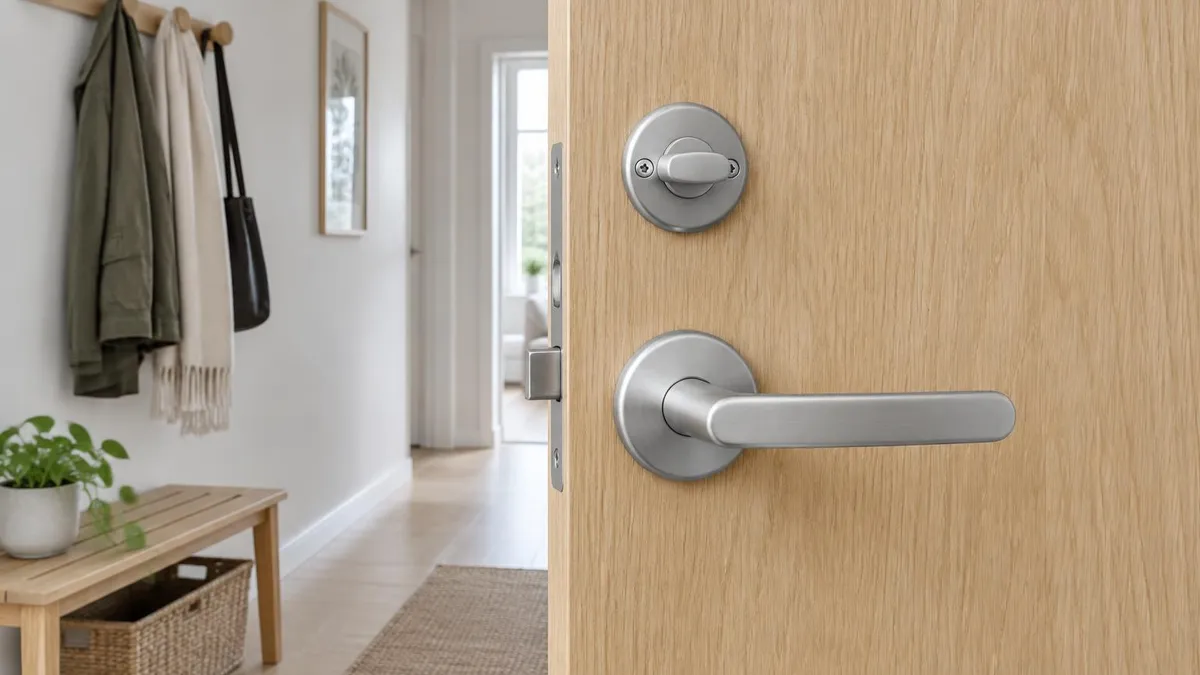
An electronic access control system does not always mean replacing the whole door locking. Tekapo Access uses a card reader at the door and a Danalock on the inside that operates the lock, while the door's existing lock stays in place.
Three parts working together
- The RFID card identifies the person when it is held against the reader.
- The card reader at the door checks a local access list to see whether the card may open the door.
- The Danalock on the inside operates the lock, unlocking or locking the door.
What stays in place
The door's existing lock and ordinary keys can stay, so the mechanical key can still be used when needed. What is added is the card reader at the door and a Danalock on the inside.
Suitability must always be assessed for the specific door, lock type and environment before installation. The reader stores a signed access list locally, so the door can decide for itself even when the network is down for a while.
Per-person access instead of handing out keys
In the administration interface, a card is linked to a person and the doors that person may use. Access can be changed without collecting or copying keys. Temporary access can be time-limited for, say, guests, cleaners or seasonal staff.
An event log also gives a better overview of how the system is used. Decide internally who may view the log and how long the information should be kept.
When the solution fits
- Association premises where different groups need access at different times.
- Properties where handing out keys takes a lot of administration.
- Lodges and clubs that already use membership cards.
- Doors where you want to keep the existing lock and a mechanical backup key.
The key takeaway
The big win is controllable access per person, without every change requiring new mechanical keys.